
Free AI Tutor: The Best No-Cost Options and What “Free” Really Means in 2026
Looking for a free AI tutor that actually helps — not a 3-day trial in disguise? The short answer: yes, several genuinely free AI tutors exist, including nonprofit-run tools like CK-12’s Flexi and freemium apps with real free tiers. This guide sorts the truly free options from the trials so you don’t hit a paywall mid-homework.

We’ll cover which tools are free forever, what each does best, and how to pick one without handing over a credit card.
What a free AI tutor actually is
A free AI tutor is a no-cost app or website that explains concepts, answers questions, and generates practice on demand, around the clock. The useful way to define it is by what a student actually gets: instant homework help, adaptive practice that adjusts to what you get wrong, and study tools like flashcards, quizzes, and study plans — without paying for any of it.
Most free AI tutors work the same basic way. You type or photograph a question, the AI reads it, and it walks back an explanation or a worked solution rather than just a bare answer. Some go further with mind maps, progress tracking, and short quizzes generated from whatever you just studied. The “free” part matters because the same underlying technology also gets sold as a $10–$50-a-month subscription, so knowing what you get for nothing — and what you don’t — saves you from signing up somewhere only to hit a wall an hour later.
That distinction between free and merely free-to-start is really the whole story of this guide, and it’s worth walking through carefully before comparing individual tools.
Is there a completely free AI tutor? (Free vs. freemium)
Yes — but “free” gets used loosely in this space, and knowing which kind you’re looking at saves you from a mid-session paywall.
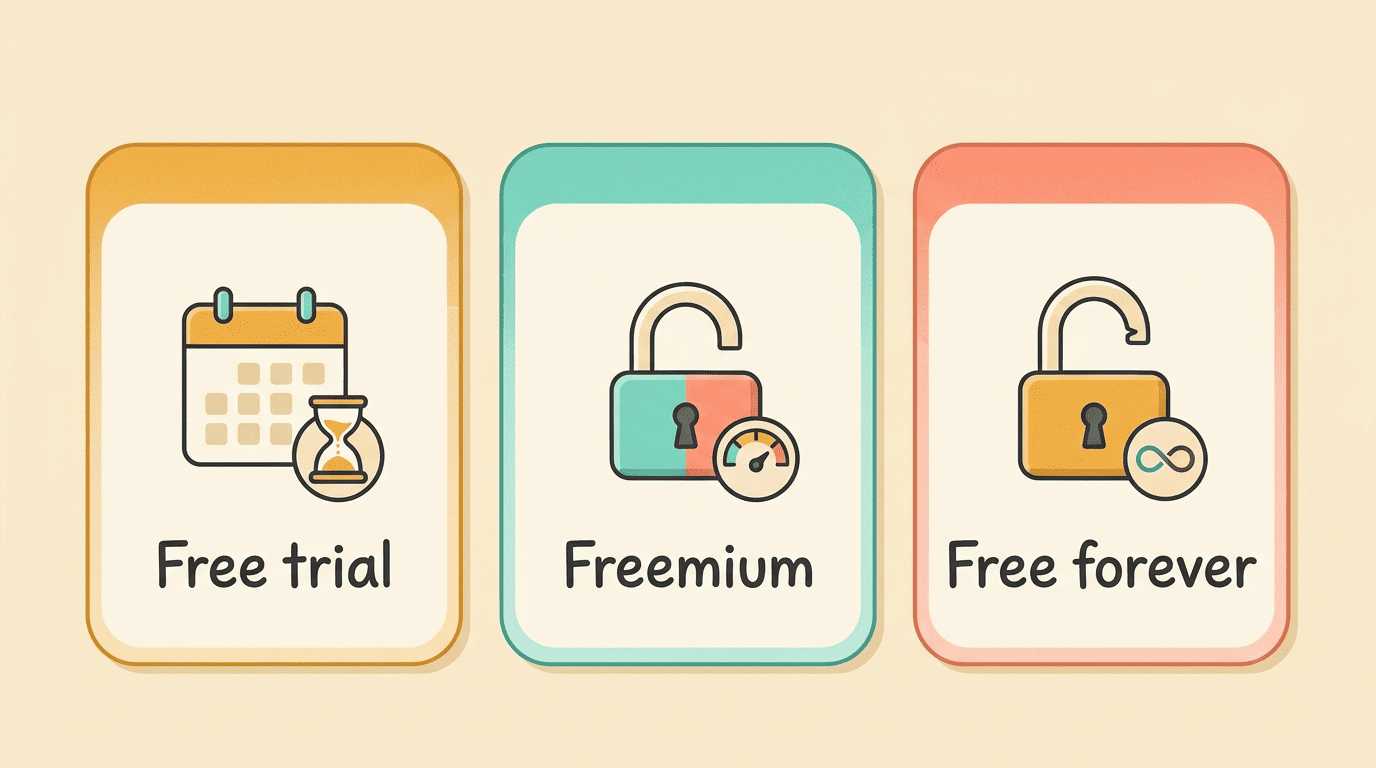
The three kinds of “free”
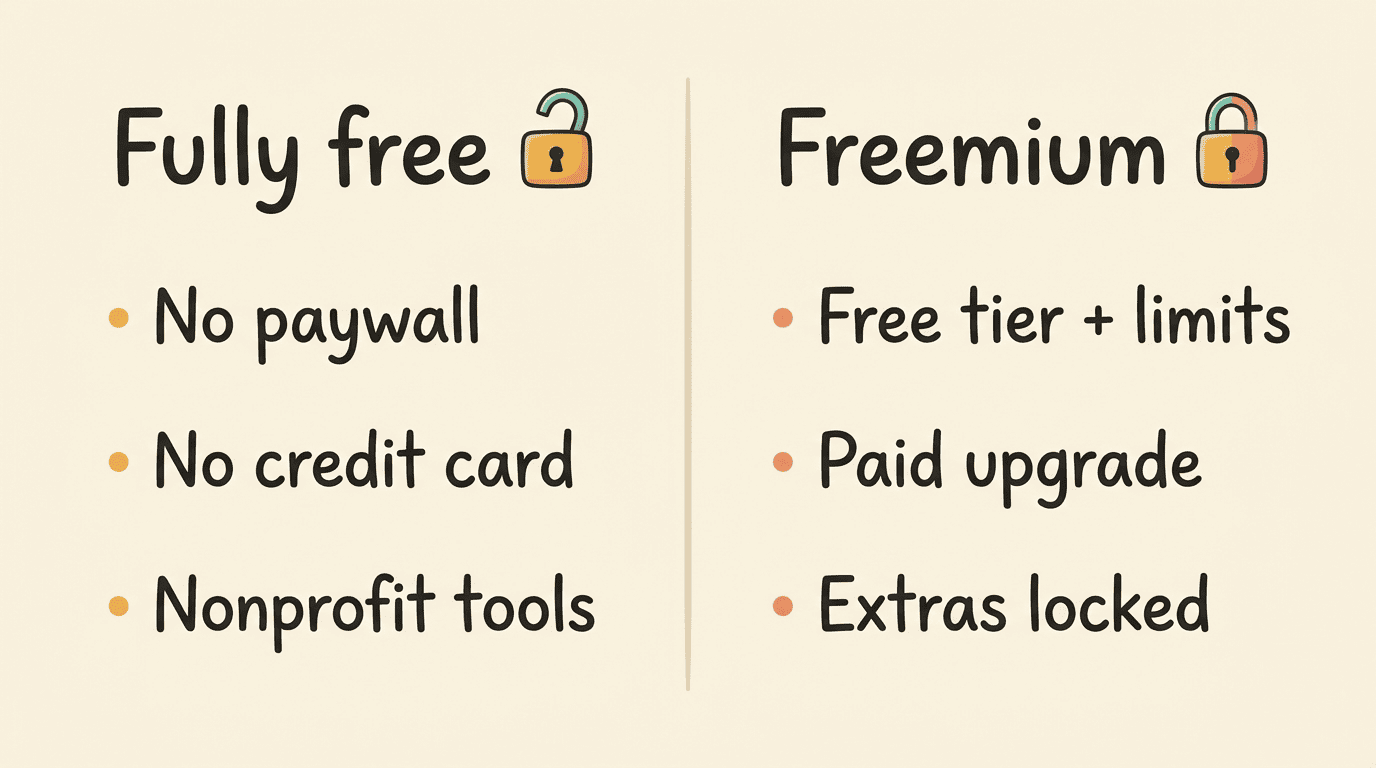
There are really three different things hiding behind the word “free” in AI tutoring apps, and mixing them up is the single most common source of frustration. Khan Academy is the clearest example of the “free forever” category done right — its core content has stayed free since it launched as a nonprofit.
| Type | What it means | What to expect |
|---|---|---|
| Free trial | Full access for a few days, then it stops | Card sometimes required upfront; converts to paid automatically |
| Tight freemium | Free forever, but with hard daily or feature limits | A handful of questions per day, no saved history, no advanced tools |
| Free forever | A genuinely usable free tier, or a fully free nonprofit tool | No card, no expiration, though premium features may still be gated |
Naming this taxonomy up front is the trust hook: once you know which bucket a tool falls into, a locked feature two weeks in stops being a surprise.
Which ones are genuinely free
A handful of tools sit in the “free forever” category with no catch attached:
- Flexi (CK-12) — fully free, run by a nonprofit, no ads and no upsell, used by over 1.5 million students a month.
- Socratic by Google — was a standalone free homework-help app, but Google folded its photo-based Q&A functionality into Google Lens in 2025, so it’s no longer a separate download. The free, no-cost homework help it offered now lives inside Lens.
- Khan Academy — its core curriculum and practice library are free; its AI tutor, Khanmigo, runs on a low-cost add-on tier rather than the free plan.
Everything else on the market tends to be freemium: usable for free, but with a premium tier priced roughly $10–$50 a month for unlimited use, deeper subjects, or advanced analytics.
The best free AI tutors compared
Once you know the difference between free-forever and freemium, the next question is which specific tool fits your subject and how much friction you’re willing to accept before hitting a limit.
Fully free tools
Flexi focuses narrowly on math and science and stays completely free because CK-12 runs as a nonprofit rather than a venture-backed company. Khan Academy rounds this out with a structured, free curriculum spanning K–12 and early college subjects. Socratic’s photo-based homework help was free too, though it now shows up inside Google Lens rather than as its own app. A free AI tutor from this group is a strong starting point for daily homework, since none of them will suddenly ask for a card.
Freemium tools with real free tiers
ChatGPT’s free tier works as a general-purpose tutor: it explains concepts, walks through problems, and answers follow-up questions across almost any subject, though it wasn’t purpose-built for education and lacks curricula or progress tracking.
iTutor is free forever across 12 languages, with no credit card required to start, making it one of the more accessible options for non-English speakers.
Mindko has built a base of 250,000-plus users across a wide range of school and college subjects, with a usable free tier before its paid plan kicks in — worth checking current Trustpilot reviews before relying on it, since ratings there have been mixed.
TutorAI has hundreds of thousands of learners on its platform; the free plan is capped to a small number of queries, and premium access runs roughly $10 a month for unlimited sessions.
TutorOcean pairs a free plan — about 10 AI messages a day — with access to multiple underlying models (GPT, Gemini, Claude) plus the option to message a live human tutor when a question needs one.
Here’s how the main options stack up side by side:
| Tool | What’s free | Best for |
|---|---|---|
| Flexi (CK-12) | Everything | Math and science |
| Khan Academy | Core curriculum (Khanmigo is paid add-on) | Structured, sequential learning |
| Socratic (now in Google Lens) | Everything | Photo-based homework help, any subject |
| ChatGPT | General chat, no education-specific tools | Broad explanations, any topic |
| iTutor | Free forever, 12 languages | Non-English speakers, no-card start |
| Mindko | Free tier, broad subject coverage | Homework across many subjects |
| TutorAI | Free plan (limited queries; premium ~$10/mo) | Ongoing daily use |
| TutorOcean | Free plan (~10 messages/day) + human handoff | Complex questions needing a real tutor |
What a free AI tutor can (and can’t) do
Knowing the feature set in advance keeps expectations realistic before you commit to any single app.
Common free features
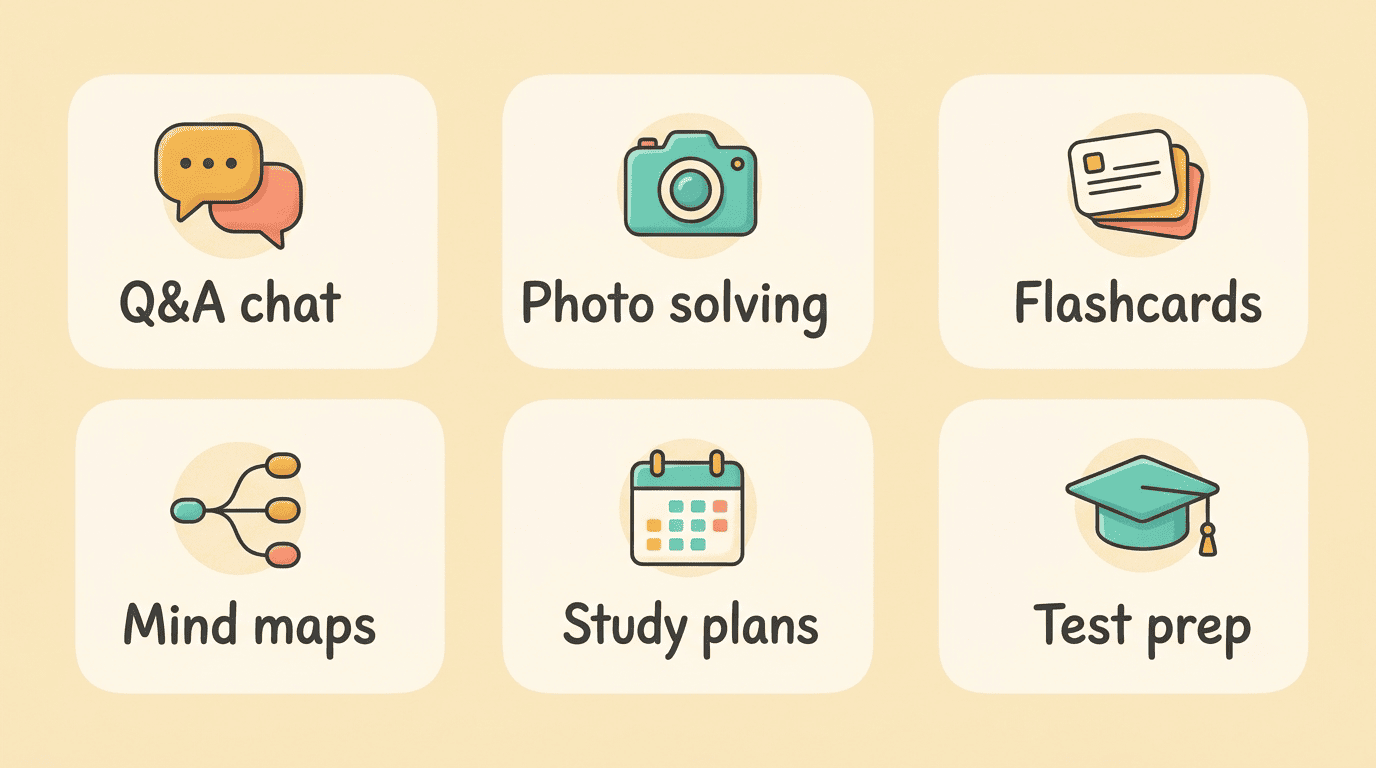
Most free AI tutors converge on a similar toolkit, regardless of which company built them:
- Q&A chat for explaining concepts step by step
- Photo-based problem solving (snap a picture, get a worked solution)
- Flashcards and auto-generated quizzes
- Mind maps for visualizing how topics connect
- Study plans and basic progress tracking
- Test-prep support for exams like the SAT, ACT, GRE, IELTS, and TOEFL
Where free tiers stop
Free tiers are genuinely useful, but they’re not unlimited, and it’s worth knowing exactly where the line sits before you rely on one for an exam week:
- Usage caps — a fixed number of questions or sessions per day
- No unlimited access — heavier users get nudged toward the paid plan
- Limited or no analytics on progress over time
- No priority support if something breaks mid-session
Free AI tutors work well for practice and explanations, but the honest answer is that most companies design the free tier to be useful, not exhaustive — that’s how the freemium model funds itself.
Free AI tutor with no sign-up
Some free AI tutors work with no account and no credit card at all, which is genuinely useful when you just need one problem solved fast rather than a full study plan. iTutor and Mindko both let you start using the tool within seconds of landing on the page.
The tradeoff is straightforward:
- No sign-up means no saved history and no progress tracking across sessions
- Each visit effectively starts from zero, which is fine for a one-off question but limiting for ongoing test prep
- If you plan to use the same tutor daily, creating a free account is usually worth the thirty seconds it takes
Free AI tutor for math and homework
Math is where free AI tutors shine, because a math problem is easy to photograph and a step-by-step solution is easy to verify against the textbook answer. Snap a photo of a problem, and Flexi or Photomath will walk back the reasoning rather than just returning a number — the same photo-solve approach Socratic used to offer before its features moved into Google Lens.
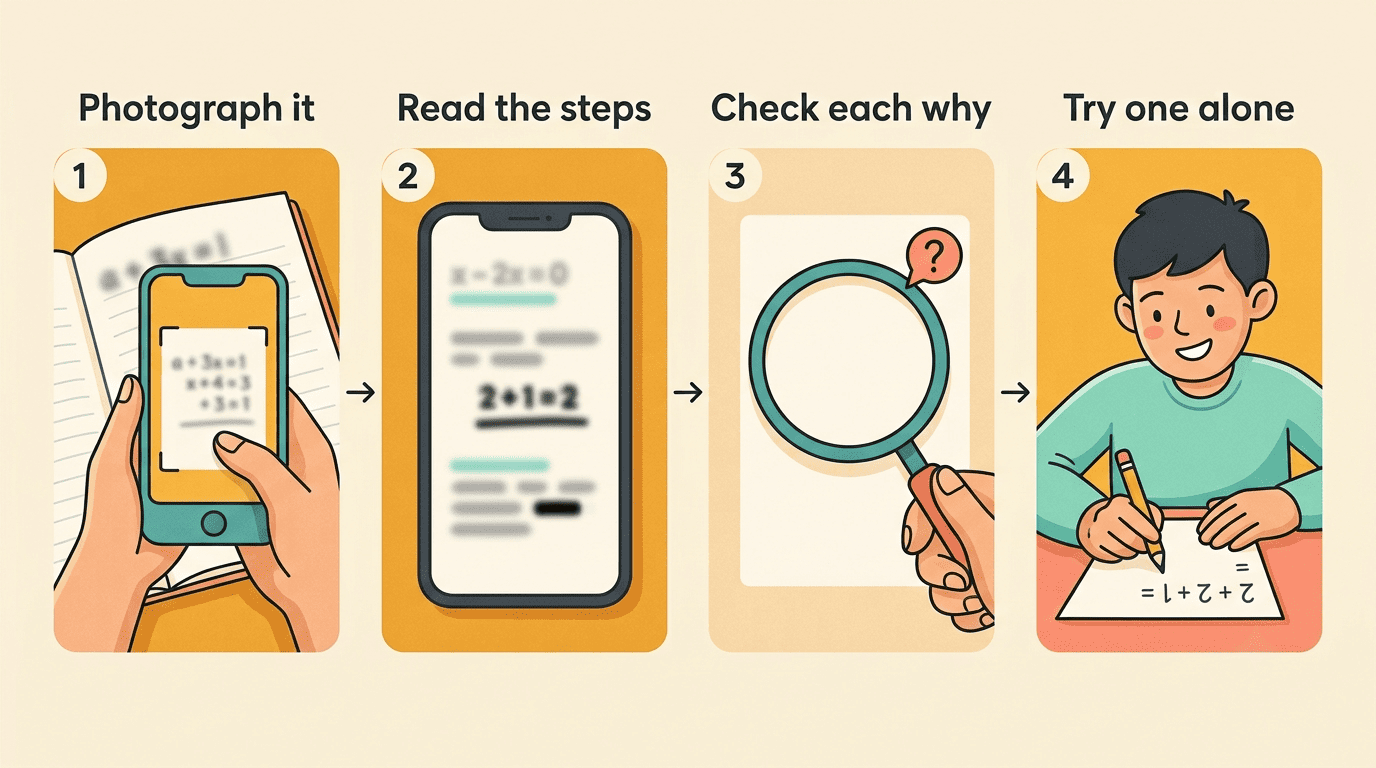
Here’s a simple way to test whether a free math tutor is actually teaching you anything, not just handing you an answer:
- Pick a problem you’ve already solved and know the correct answer to.
- Photograph or type it into the tool exactly as it appears in your textbook.
- Read the full worked solution, not just the final number.
- Check whether it explains why each step follows from the last one.
- Try a slightly harder variation of the same problem without help, using what it just explained.
- If you can solve the second problem alone, the explanation actually worked.
- If you can’t, look for a tutor that breaks steps down further or ask it to re-explain the step you got stuck on.
Structured, step-by-step subjects like math tend to be a natural fit for AI tutoring, since each step can be checked against a known correct answer. Outside research backs the broader idea: a World Bank-backed generative-AI tutoring pilot in Nigeria found learning gains equivalent to roughly two years of typical progress, outperforming most rigorously evaluated education interventions studied in developing countries.
Are free AI tutors any good — and safe to trust?
Sal Khan, whose organization built one of the free tools mentioned above, has been publicly optimistic about the category while still framing it as a complement to teachers rather than a replacement for them:
We’re going to give every student on the planet an artificially intelligent but amazing personal tutor. And we’re going to give every teacher on the planet an amazing, artificially intelligent teaching assistant.
Sal Khan, founder, Khan Academy — TED Talk, 2023
Free AI tutors are genuinely useful for practice and explanations, but it’s worth setting expectations honestly. Verify important answers rather than trusting them blindly, since even well-built AI tools make mistakes on edge cases. Mind data privacy on free apps — read what they collect before connecting a school or personal account, since ad-supported free tiers often trade convenience for data collection. And treat an AI tutor online as a supplement, not a replacement for a teacher, especially on complex or high-stakes work like an exam essay or a lab report.
How to choose the right free AI tutor
The right choice usually comes down to matching the tool to the subject rather than picking whichever app ranks first in a search. Math and science lean toward Flexi or Photomath; broad, general explanations lean toward ChatGPT or iTutor; structured, sequential courses lean toward Khan Academy.
Run through this checklist before settling on one:
- Match the subject. Math and science favor Flexi or Photomath; general subjects favor ChatGPT or iTutor.
- Confirm it’s truly free, not a trial — check whether access disappears after a few days.
- Check for a credit card requirement at sign-up, even for a “free” plan.
- Read the free-tier limits — daily question caps, missing analytics, no saved history.
- Check language and privacy settings, especially if a school account is involved.
Default to trying one free option before paying for anything — most students find one of the fully free tools covers daily homework without ever needing a paid tier.